ROOPKUND TREK PREPARATION & SAFETY

Prepare Well. Trek Responsibly. Stay Safe.

6–8 Weeks Preparation Recommended | High-Altitude Trek |  Experienced Trekking Team

Preparation Introduction

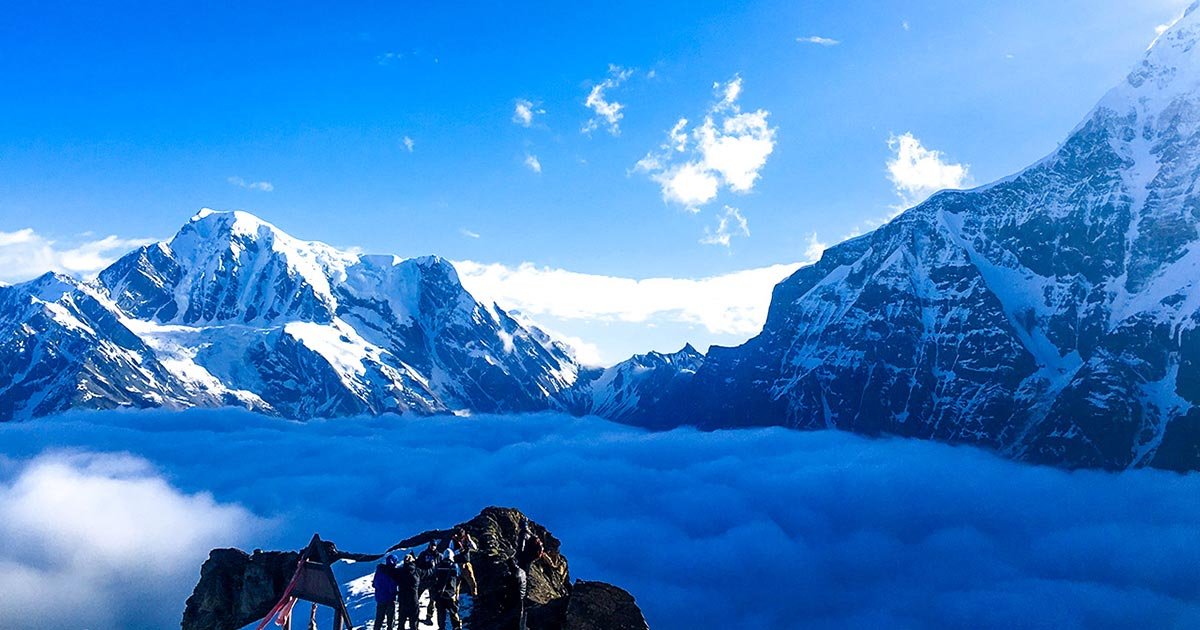
The Roopkund Trek is a challenging high-altitude adventure through the beautiful mountains of Uttarakhand. With long trekking days, steep ascents, unpredictable mountain weather, and high-altitude terrain, proper preparation is essential.

Our trek leaders and support team prioritize your safety throughout the journey. However, a safe and enjoyable trek also depends on your fitness, preparation, equipment, and ability to follow the guidance of the trek team.

Fitness & Training

Roopkund requires a good level of cardiovascular fitness and leg strength. You should be comfortable walking for several hours on consecutive days, including on steep and uneven terrain.

Cardiovascular Fitness

Regular running, brisk walking, cycling or stair climbing to improve stamina and breathing capacity.

Leg Strength

Squats, lunges, step-ups and calf raises to prepare your legs for steep ascents and descents.
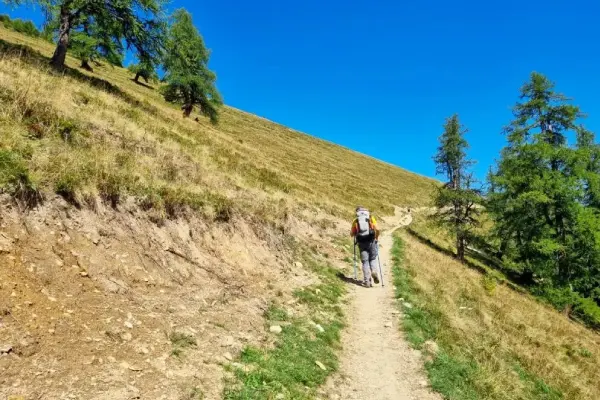
Endurance

Gradually increase your walking distance and include back-to-back long walks to build trekking endurance.

Core & Balance

Practice planks, side planks and balance exercises for better stability on uneven and rocky terrain.
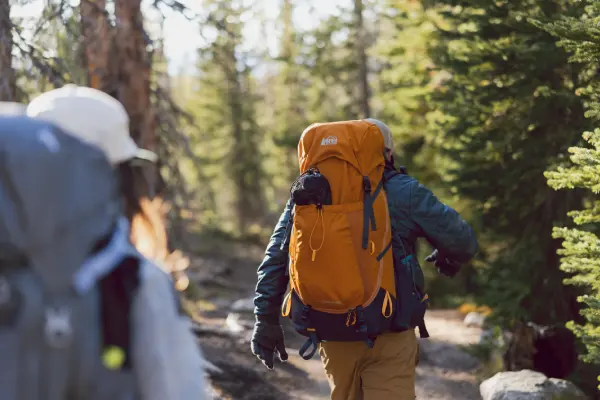
Backpack Practice

Train with a gradually increasing backpack weight during walks to get your body accustomed to carrying your trekking gear.
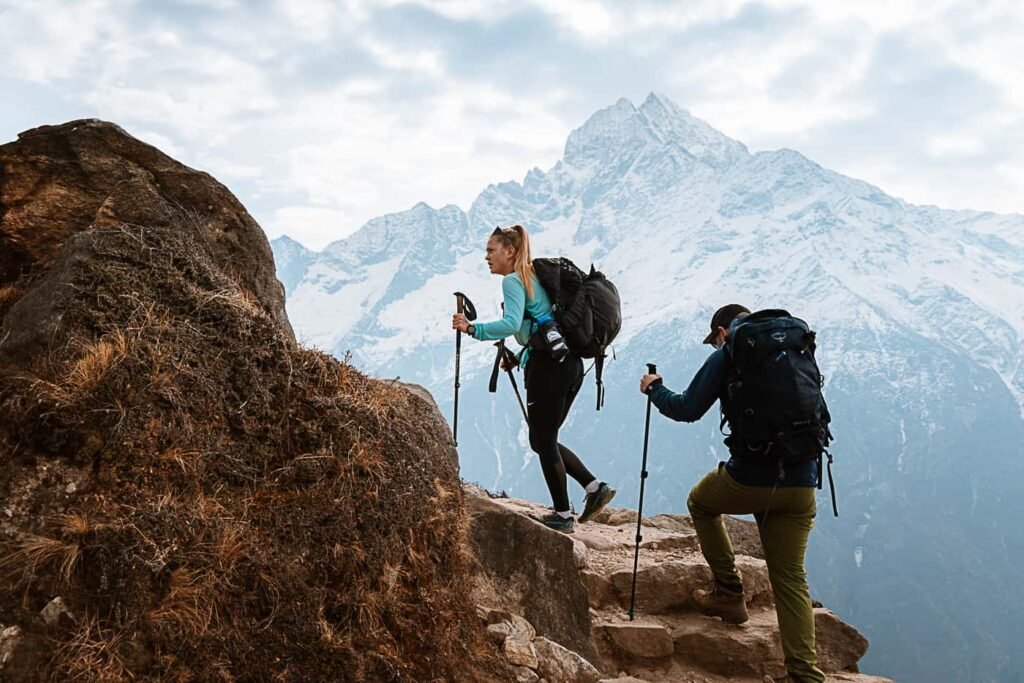
6–8 Weeks Preparation Recommended

Week 1–2: Basic cardio + regular walking
Week 3–4: Distance increase + stairs + strength training
Week 5–6: Longer uphill walks + backpack practice
Week 7–8: Peak endurance + recovery + final gear testing

Important: You should be physically fit enough to manage long walking days at altitude. If you have any medical concerns or are unsure about your fitness for a high-altitude trek, consult a qualified medical professional before joining.

Altitude & Acute Mountain Sickness (AMS)

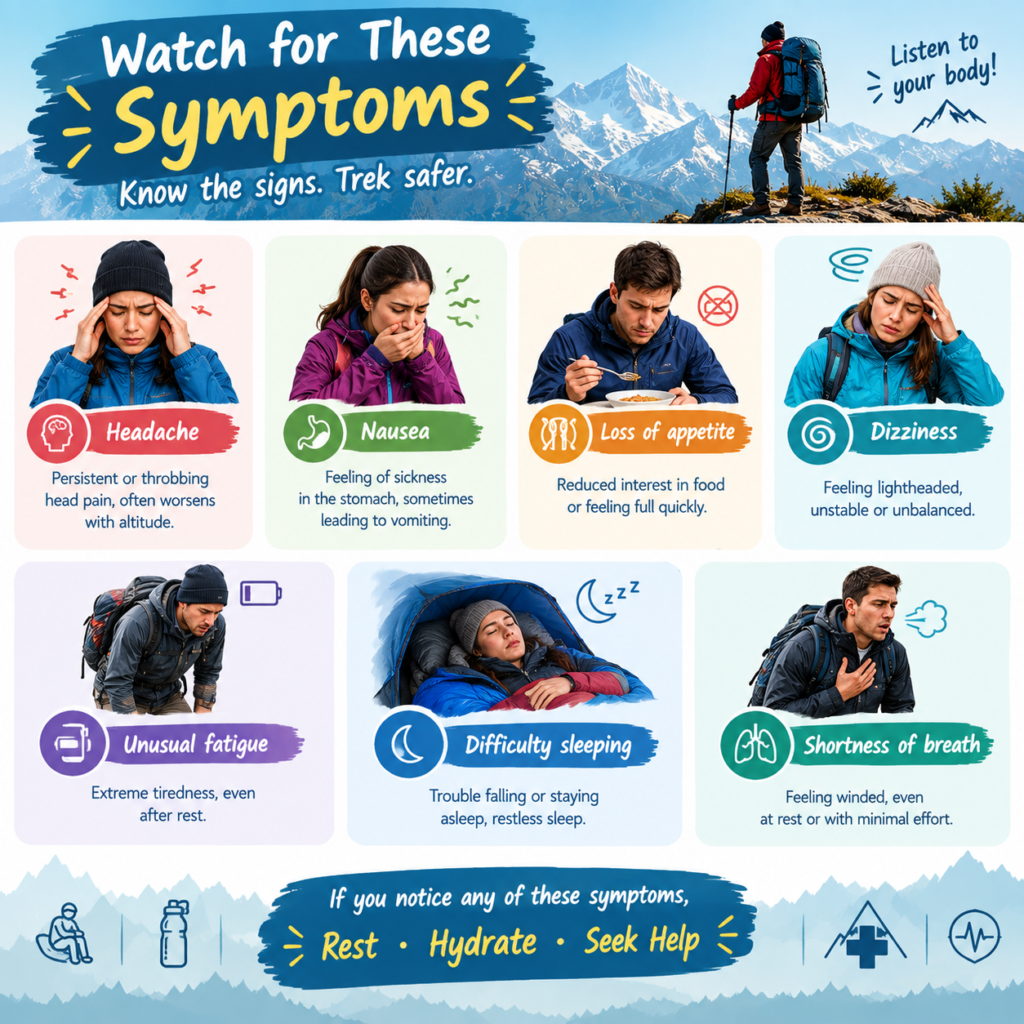
  •  Headache
  •  Nausea
  •  Loss of appetite
  •  Dizziness
  •  Unusual fatigue
  •  Difficulty sleeping
  •  Shortness of breath


IMPORTANT SAFETY RULE
Do not continue ascending when significant or worsening altitude-related symptoms are present. Inform your trek leader immediately.

Weather & Mountain Conditions

Be Prepared For

  • Rain
  • Snowfall
  • Strong winds
  • Cold temperatures
  • Reduced visibility
  • Slippery trails
  • Snow-covered sections
  • Rapid temperature changes

SAFETY COMES FIRST

The trek team may modify the route, schedule or itinerary when weather, snow, trail conditions or other mountain factors make the original plan unsafe.

Reaching a particular campsite or summit is never more important than safety.

Safety & Emergency Procedures

  • Regular group safety briefings
  • Monitoring for altitude-related symptoms
  • Pace adjusted according to group ability
  • Weather and trail condition monitoring
  • Route/schedule changes when required
  • Emergency response procedures
  • Descent when continuing becomes unsafe

Emergency Situation

If You Feel Unwell:

1. Inform the trek leader immediately.
2. Stop and rest.
3. Follow the trek team’s instructions.
4. Do not leave the group without informing the team.
5. Be prepared to descend or evacuate if required.

Responsible Trekking

  • Stay on designated routes
  • Follow trek-leader instructions
  • Do not litter
  • Respect local communities
  • Do not disturb wildlife
  • Avoid risky behaviour for photographs
  • Follow local rules and regulations
  •  

Leave the mountains as you found them — or better.

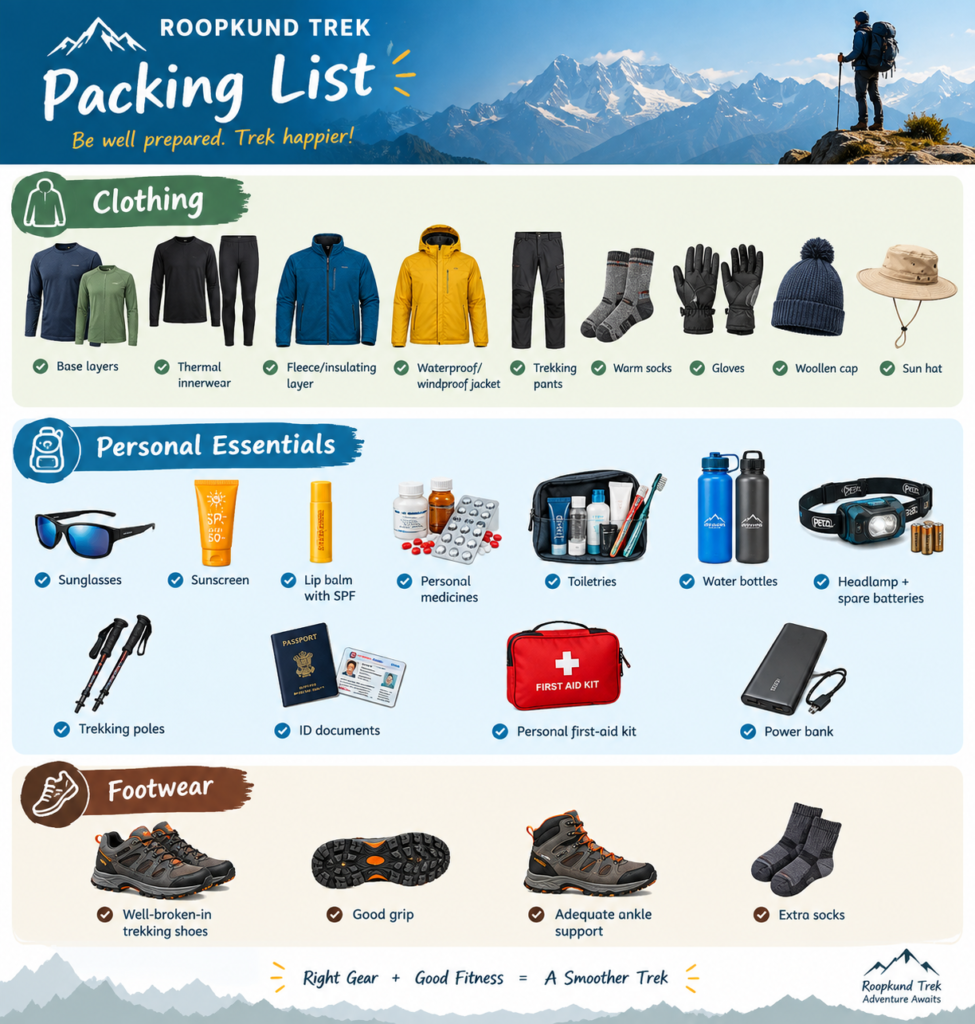
Final Preparation Checklist

TREK SAFE. TREK PREPARED.

Roopkund is not a trek to be rushed.

With proper preparation, suitable equipment, responsible trekking habits and close coordination with your trek team, you can focus on the forests, alpine meadows, mountain views and the experience of trekking deep into the Himalayas.

Prepare well. Respect the mountains. Listen to your trek team. Put safety first.

EXPLORE ROOPKUND TREK