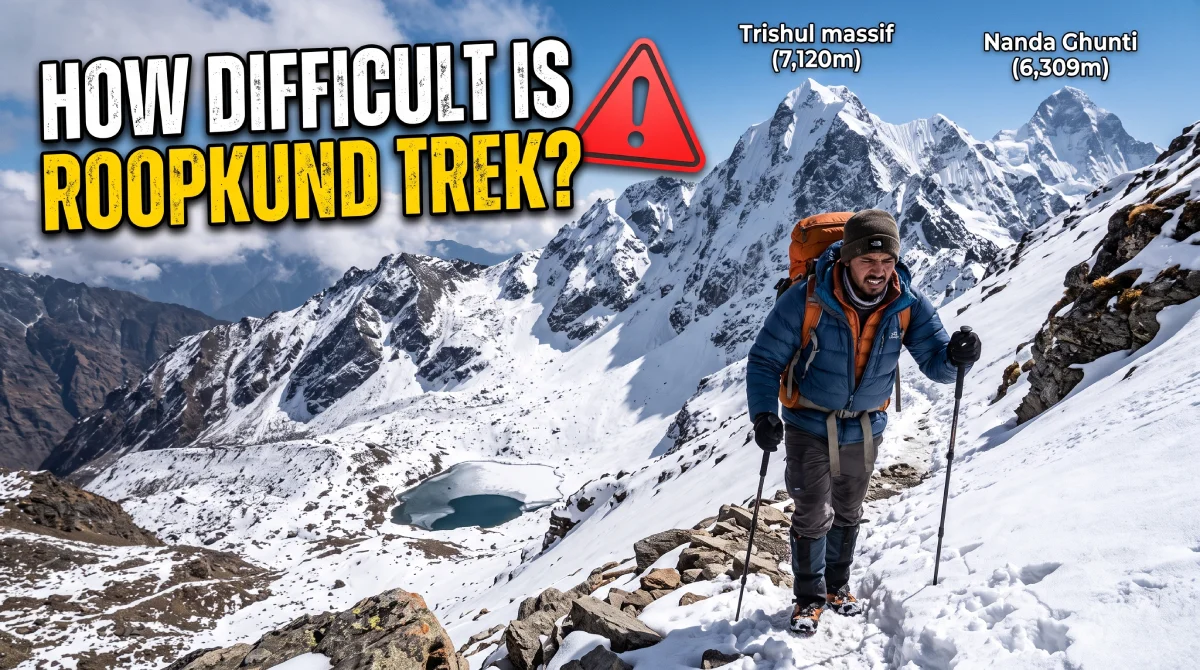
If you are planning a Himalayan adventure, one of the first questions you may have is: How difficult is Roopkund Trek?
The Roopkund Trek is considered a moderate to difficult high-altitude trek. The trail combines steep ascents, long trekking days, changing weather, rugged terrain, and high altitude. While it can be physically demanding, proper preparation and training can make the experience much more manageable.
Known for its spectacular Himalayan scenery, alpine meadows, forests, and the mysterious Roopkund Lake, this trek has long attracted adventure enthusiasts looking for a challenging trekking experience in Uttarakhand.
In this guide, we will cover Roopkund Trek difficulty, altitude, fitness requirements, terrain, weather, preparation, and whether the trek is suitable for beginners.
Roopkund Trek Difficulty at a Glance
Before getting into the details, here is a quick overview:
-
Difficulty level: Moderate to difficult
-
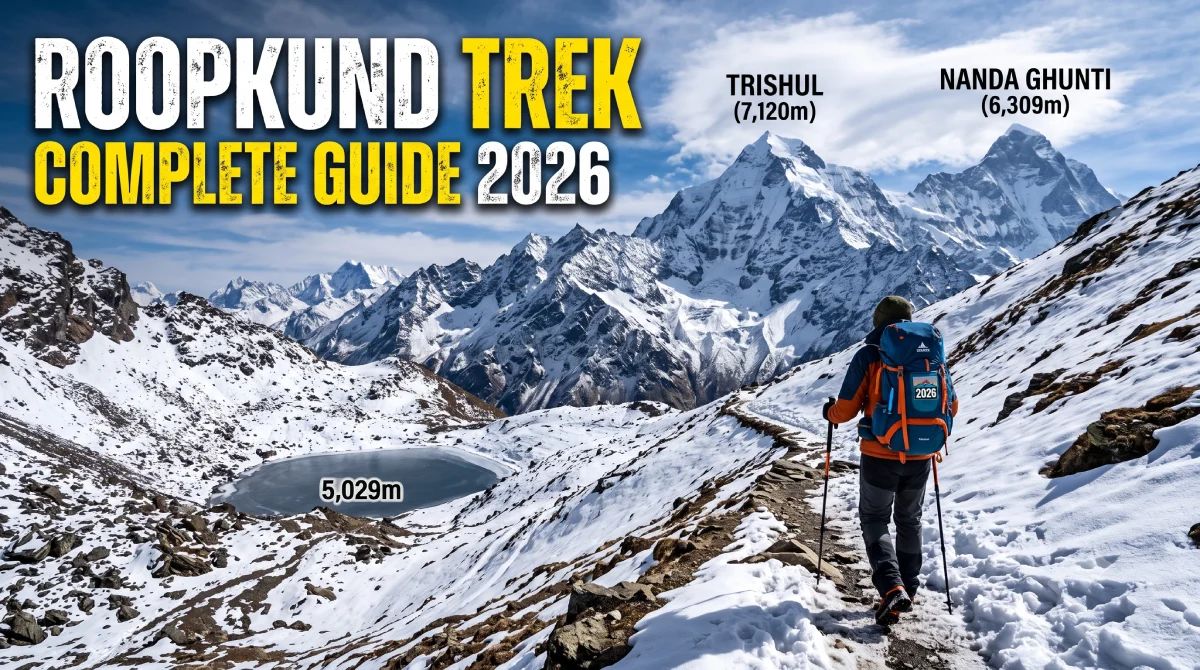
Maximum altitude: Approximately 5,029 metres (16,500 feet)
-
Terrain: Forest trails, grasslands, steep slopes, rocky sections, and potentially snow-covered terrain
-
Trekking hours: Often around 5–8 hours a day, depending on the itinerary and conditions
-
Fitness required: Good cardiovascular endurance and leg strength
-
Altitude: One of the major challenges of the trek
-
Weather: Can change quickly at higher elevations
-
Experience: Previous trekking experience is beneficial
The actual difficulty can vary depending on the season, route conditions, weather, itinerary, and individual fitness.
Why Is Roopkund Trek Difficult?
There isn’t just one reason why Roopkund is considered challenging. Several factors combine to make the trek physically demanding.
1. High Altitude
Roopkund Trek altitude is one of the biggest factors affecting its difficulty. Roopkund Lake lies at approximately 5,029 metres above sea level.
At this elevation, the air contains less oxygen than at lower altitudes. As a result, trekkers may experience breathlessness and fatigue even while performing activities that would normally feel easy.
Altitude affects people differently, so being physically fit does not completely eliminate the risk of altitude-related problems.
Proper acclimatization and a gradual ascent are therefore extremely important.
2. Steep Ascents
The Roopkund trail includes several steep sections. Walking uphill at high altitude requires considerably more effort than walking on flat terrain.
Your legs, lungs, and cardiovascular system all have to work harder as you gain elevation.
This is why Roopkund Trek fitness preparation should include activities such as:
-
Stair climbing
-
Uphill walking
-
Jogging
-
Squats
-
Lunges
-
Long-distance walking
-
Cardiovascular workouts
3. Long Trekking Days
Another factor affecting Roopkund Trek difficulty is the duration of daily walks.
Depending on the itinerary and trail conditions, trekkers may spend several hours on the trail each day. The challenge is not only completing one long walk but maintaining energy over multiple consecutive days.
Training with longer walks before your trek can help your body adapt to prolonged physical activity.
4. High-Altitude Weather
Mountain weather can be unpredictable.
Temperatures can fall rapidly, while rain, snow, fog, and strong winds can make the trail more difficult. Weather conditions can also affect visibility and trail surfaces.
Therefore, trekkers should carry appropriate clothing and equipment and be prepared for changing conditions.
5. Snow and Uneven Terrain
Depending on the season and current conditions, parts of the route may contain snow.
Walking over snow requires more energy and balance than walking on a dry trail. Rocky and uneven sections can also increase the physical demand on your ankles and knees.
Good trekking shoes with reliable grip are essential.
Is Roopkund Trek Difficult for Beginners?
Is Roopkund Trek suitable for beginners? This depends largely on your fitness and previous trekking experience.
If you have never completed a trek before and are not accustomed to long walks or strenuous physical activity, Roopkund can be a challenging first Himalayan trek.
On the other hand, a physically fit person who has completed shorter or moderate-level treks may be better prepared for the demands of a high-altitude route.
If Roopkund is your first major Himalayan trek, it is particularly important to:
-
Start physical training well in advance
-
Build cardiovascular endurance
-
Practise walking uphill
-
Become comfortable walking for several hours
-
Learn basic high-altitude trekking precautions
-
Follow your trek leader’s instructions
Previous trekking experience is helpful, but preparation and responsible decision-making are equally important.
Roopkund Trek Fitness Requirements
You do not need to be a professional athlete to attempt a demanding Himalayan trek. However, you should have a good level of cardiovascular fitness and sufficient leg strength.
A useful Roopkund Trek fitness routine can include:
Cardio Training
Aim for regular brisk walking, jogging, cycling, or other cardiovascular exercise.
Gradually increase the duration rather than suddenly increasing your workout intensity.
Stair Training
Stair climbing is particularly useful because it develops both cardiovascular endurance and leg strength.
If you have access to hills, regular uphill walking can also be valuable.
Strength Training
Focus on exercises such as:
-
Squats
-
Lunges
-
Step-ups
-
Calf raises
-
Planks
These exercises can help prepare your legs and core for long days on uneven terrain.
Long-Distance Walking
Include longer walks in your preparation. Gradually increase both distance and duration.
You can also practise walking with a backpack so your body becomes accustomed to carrying your trekking gear.
How Many Days Does It Take to Prepare for Roopkund Trek?
Your preparation period depends on your existing fitness level.
If you already exercise regularly, several weeks of focused trekking preparation may be useful. If you have a sedentary lifestyle, give yourself considerably more time to build endurance gradually.
Avoid trying to complete intense workouts immediately before the trek. Consistent training over time is generally more useful than last-minute preparation.
Is Roopkund Trek Safe?
Like any high-altitude Himalayan trek, Roopkund involves genuine risks.
Altitude, extreme weather, difficult terrain, dehydration, fatigue, and sudden changes in conditions can all affect trekkers.
One of the most important aspects of Roopkund Trek safety is recognizing when your body is struggling at altitude.
Symptoms such as headache, dizziness, nausea, unusual fatigue, or breathing difficulties should not simply be ignored. If symptoms become serious or worsen, trekkers should follow professional guidance and descend when necessary.
No summit, pass, or destination is more important than your safety.
Best Time for Roopkund Trek
The difficulty of the Roopkund Trek can vary significantly depending on the season.
During periods when snow remains on higher sections of the trail, walking can become more demanding. Weather conditions can also change quickly in the mountains.
Before planning your trek, check the latest route conditions, accessibility, permits, local regulations, and weather forecast. Access to Himalayan trekking routes can change, so older itineraries or travel blogs may not accurately represent current conditions.
Roopkund Trek Preparation: Essential Tips
Proper preparation can significantly improve your trekking experience.
Start Training Early
Begin your fitness preparation well before your departure date.
Practise Uphill Walking
Include stairs, hills, or inclined walking in your training.
Train With a Backpack
Gradually practise walking with the type of backpack you expect to carry.
Buy Suitable Trekking Shoes
Choose comfortable trekking shoes with good grip and break them in before your trek.
Pack According to the Weather
Carry suitable layers, rain protection, warm clothing, and other essential trekking equipment.
Stay Hydrated
Drink water regularly and pay attention to your body’s needs, especially during long trekking days.
Respect Acclimatization
Do not assume that physical fitness alone protects you from altitude-related problems. Give your body time to adapt to increasing elevation.
What Makes Roopkund Trek Worth the Challenge?
The difficulty is only one part of the Roopkund experience.
The trail passes through changing Himalayan landscapes, from forested areas to open alpine terrain and high-altitude mountain scenery.
For trekkers who enjoy physically demanding adventures, the combination of challenging terrain and dramatic landscapes is an important part of the appeal.
The experience is not simply about reaching the destination. The changing landscape, mountain environment, physical challenge, and sense of accomplishment all contribute to the journey.
Final Verdict: How Difficult Is Roopkund Trek?
So, how difficult is Roopkund Trek?
Roopkund is generally considered a moderate to difficult high-altitude trek. Its main challenges include high altitude, steep climbs, long trekking days, unpredictable weather, and potentially difficult terrain.
It may not be the most suitable choice for someone with no trekking experience or inadequate physical preparation. However, trekkers with good fitness, appropriate preparation, and a responsible approach to altitude can better handle the physical demands.
If you are planning the Roopkund Trek, don’t focus only on how difficult the trail is. Focus on how well you can prepare for it.
Build your endurance, strengthen your legs, practise uphill walking, carry appropriate gear, allow sufficient time for acclimatization, and always check current route conditions before departure.
With proper preparation and respect for the mountains, the challenge itself can become one of the most memorable parts of the Himalayan trekking experience.
Frequently Asked Questions About Roopkund Trek
Is Roopkund Trek very difficult?
Roopkund is generally considered a moderate to difficult high-altitude trek. The combination of altitude, steep sections, long walking days, and changing weather makes it physically demanding.
Can beginners do Roopkund Trek?
Beginners with good physical fitness may be better prepared than those without trekking or endurance experience, but Roopkund is not an easy introductory trek. Previous trekking experience can be helpful.
What is the maximum altitude of Roopkund Trek?
Roopkund Lake is located at approximately 5,000 metres (16,400 feet) above sea level.
How fit should I be for Roopkund Trek?
You should have good cardiovascular endurance, leg strength, and the ability to walk for several hours over uneven and uphill terrain.
How should I train for Roopkund Trek?
Focus on cardiovascular exercise, stair climbing, uphill walking, strength training, and progressively longer walks. Practising with a backpack can also help.
Is altitude a major challenge on Roopkund Trek?
Yes. The high altitude is one of the most important factors affecting the difficulty of the trek. Proper acclimatization and awareness of altitude-related symptoms are essential.
Does Roopkund Trek have snow?
Snow conditions depend on the season and current weather. Higher sections can have snow, which may increase the difficulty of the trek.
What is the best way to prepare for Roopkund Trek?
Start training well in advance, build endurance gradually, strengthen your legs, practise uphill walking, carry suitable equipment, and follow a responsible acclimatization schedule.